Laser

News & Events

Welcome to Saira Ghani

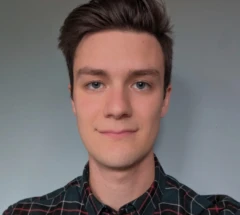
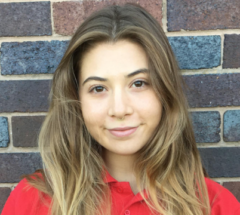
Welcome to Saira Ghani who joins the Orr-Ewing group and Dr Beatrice Collins’s group as a co-supervised PhD student. Saira recently completed the first phase of her postgraduate training in the EPSRC-funded Technology Enhanced Chemical Synthesis (TECS) Centre for Doctoral Training. She is now starting her PhD research, which will focus on the design and operational mechanisms of light-driven out-of-equilibrium molecular cargo transporters.

Welcome to Dr Sanjoy Patra

Welcome to Dr. Sanjoy Patra, who joins the Oliver research group as a postdoctoral research fellow working on the EPSRC-NSF funded Quantum Information Science grant. Sanjoy completed his MSc-PhD at the Indian Institute of Science, Bangalore, under the supervision of Dr. Vivek Tiwari, where he focused on the development and optimisation of polarisation-controlled multidimensional electronic spectroscopy to study singlet fission and symmetry-breaking charge separation in molecular dyads. In his MSc, he also developed theoretical frameworks for formulating effective normal modes to describe vibronic effects in molecular dyads.

Andrew Orr-Ewing elected to the American Academy of Arts and Sciences

Andrew Orr-Ewing has been elected as an International Honorary Member of the American Academy of Arts and Sciences. The Academy was founded in 1780 and is based in Cambridge, Massachusetts. Andrew will travel there in October 2026 to attend the induction ceremony for new members. Further details are available at the website of the American Academy of Arts & Sciences.

Welcome to Dr Qian Zhou

Welcome to Dr Qian Zhou who has joined the Orr-Ewing group as a research associate. Qian was awarded her PhD in physical chemistry at Beijing Normal University for research under the supervision of Professor Hongmei Su, and then obtained postdoctoral experience at BNU with Professor Su and Professor Wenkai Zhang. She is expert in the study of the photochemistry of DNA nucleobases and related molecules using time-resolved spectroscopy methods. Qian was awarded a grant from BNU to join the Bristol group.

Meiyue and Hallam win prizes at the RSC Spectroscopy and Dynamics Group Meeting 2026

Congratulations to Meiyue Liu and Hallam Greene who won best talk and poster prizes, respectively, at the RSC’s annual Spectroscopy and Dynamics Group Meeting 2026 held at Warwick. Meiyue’s talk was entitled: “Tracking photoinduced electron transfer in de novo designed proteins,” and Hallam’s poster “Relaxation pathways of near-UV excited 4-nitrocatechol and its methyl ethers in solution”.

Welcome to Dr Alex Stuart

Welcome to Dr Alex Stuart, who joins the Oliver group as a postdoctoral research fellow working on the BBSRC-funded sLoLa Circuits of Life grant. She previously worked as a postdoc at the University of Sydney with Prof. Girish Lakhwani, where she used optical spectroscopy to study the photophysics of organic semiconductors for optoelectronic applications. Prior to this Alex received her PhD from the University of Adelaide with A/Prof. Tak Kee and A/Prof David Huang, primarily on singlet fission and the photochemistry of polyacenes.

Alex was recently awarded the Cornforth Medal by the Royal Australian Chemical Society for her outstanding PhD thesis. The national prize is annually awarded in Australia “for a thesis on chemical research, recognising outstanding achievement in Chemistry and to promote chemical communication.”

Welcome to Jasmine Bone and Matthew Hall

Jasmine and Matthew have joined the research group of Prof Andrew Orr-Ewing to undertake PhD research using ultrafast laser spectroscopy. Their research projects will use the group’s existing femtosecond laser laboratory and a new laboratory currently in development with funding from an ERC Advanced Grant. The research will focus on the photochemical dynamics of organic molecules in solution and in micron-scale aerosol droplets. Jasmine has recently completed an MSc by Research in computational photochemistry, supervised by Bristol colleague Professor Basile Curchod. Matthew successfully completed his MChem degree in Chemistry with a Year in Industry from the University of York in 2025.

Saurabh Khodia wins poster prize at AOSC-2025 conference

Congratulations to Saurabh Khodia who won a best poster prize at the 9th Asian and Oceanian Spectroscopy Conference, held from 21 – 25 September 2025 in Bogmallo Beach, Goa, India. Saurabh’s poster “Role of H-bonding in modulating reactivity with Criegee intermediates” describes his experimental measurements of the rate constants for reactions of Criegee intermediates with various volatile esters using a cavity ring-down spectroscopy apparatus in the Bristol laboratory. The work contributes to a better understanding of the growth of secondary organic aerosol particles in the lower atmosphere. The poster prize was sponsored by the Wiley journal ChemPhysChem.

Andrew Orr-Ewing elected as a fellow of the National Academy of Sciences, India

Andrew Orr-Ewing has been elected as a Foreign Fellow of the National Academy of Sciences, India (NASI).

NASI is the oldest Science Academy of India, established in 1930 by a group of world-leading Indian scientists.  It is based in Prayagraj, its membership includes scientists, engineers and health professionals, and it promotes science and technology in India. 

Andrew is one of only 8 new foreign fellows elected in 2025.  His citation is for his significant contributions in ultrafast laser spectroscopy in both gas and liquid phases. This election to NASI reflects the strong ties between Andrew’s group and eminent scientists at several leading institutions in India, including IIT Bombay where Andrew was a Visiting Professor in 2024.  Andrew joins School of Chemistry colleague Varinder Aggarwal FRS who was elected as a Foreign Fellow of NASI in 2024.

Olivia Hawkins Completes her PhD

Congratulations to Olivia Hawkins for passing her PhD viva voce exam on 23rd July 2025. Her PhD examiners were Prof Vas Stavros (Birmingham) and Prof Andrew Orr-Ewing (Bristol). Her PhD thesis entitled “Ultrafast Dynamics of 1,6-Diphenyl-1,3,5-Hexatriene in Complex Environments” used an arsenal of different experimental techniques to probe how the excited state photochemical dynamics of a model short-chain polyene and important bioimaging dye, DPH, are strongly influenced by their environment- in liquids or inside polypeptide barrels.

Tom Oliver secures new £1M UK-US grant

A £1M grant has been awarded to Tom and US collaborator Prof Stephen Bradforth (University of Southern California) for a collaborative 3-year project entitled Quantum Coherence and Correlations in Condensed Phase Photochemical Reaction Dynamics. The international collaborative project is UK-led, and funding for studies at the University of Bristol are supported by the EPSRC.

The Oliver and Bradforth groups will study how important light-driven reactions key to photocatalysis, protein damage and drug design have spin-selective product yields that cannot be explained within a conventional classical framework. New multidimensional ultrafast experimental techniques will be designed to read out the developing spin-state and its entanglement at much faster timescales than have hitherto been possible from magnetic resonance experiments – looking critically at chemical phenomena through a new lens. Their investigations will reveal how the quantum mechanical state imprinted by light determines the overall outcome of photochemical reactions.

Andrew Orr-Ewing awarded ERC Advanced Grant

Andrew has been awarded a European Research Council (ERC) Advanced Grant for 5 years to study photochemical reactions in water droplets only a few micrometres in diameter. These droplets have volumes a billion times smaller than a teaspoon of water. In Earth’s atmosphere, droplets of this size are commonly found in clouds, fog and sea-spray, and they also form when organic particles from wildfires or human pollution condense water vapour from the surrounding air. The PHAERO (Ultrafast Photochemistry in Organic Aerosols) project will explore how organic compounds in these microdroplets are affected by the ultraviolet A and ultraviolet B radiation in sunlight. The work will deepen our understanding of how organic aerosol particles change their chemical composition and physical properties over time in the Earth’s atmosphere. These changes determine how these airborne particles influence the Earth’s climate by absorption or scattering of sunlight, causing net warming or cooling respectively. The ERC grant will fund a new ultrafast laser laboratory for this research.

Meiyue wins RSC poster prize

Congratulations to Meiyue Liu for winning a poster prize at the Royal Society of Chemistry’s Annual Spectroscopy and Dynamics Group Meeting in January 2025! Her poster was entitled Time-Resolved Electronic and Vibrational Probes of Riboflavin Excited State Dynamics in Solution.

Camilla Gajo Completes her PhD

Congratulations to PhD student Camilla Gajo for passing her PhD viva voce exam on 21st January! During Camilla’s PhD she used ultrafast 2D electronic spectroscopy to investigate the photophysical dynamics of a variety of molecules in solution and in de novo protein samples. Camilla will shortly start a round-the-world tour, taking in Oceania, before returning to Bristol in March- we wish her well on her travels and look forward to seeing her again soon.

Welcome to Louis Jakobson and Sam Arrowsmith

Louis and Sam have joined the research groups of Prof Andrew Orr-Ewing and Dr Tom Oliver respectively. Their research will use ultrafast laser spectroscopy to explore the photochemical pathways of organic chromophores in solution, in aerosol microdroplets, or embedded in de novo protein environments. Louis recently graduated from Durham University, and Sam from the University of Oxford.

Will Whitaker completes his PhD

Congratulations to Will Whitaker who passed his PhD viva in August 2024. Will’s PhD thesis examined photochemical pathways in organic photocatalysts and in nitroaromatic phototrigger compounds using a variety of time-resolved laser spectroscopy techniques supported by quantum chemistry calculations.

Hilary McCarthy finishes her PhD

Well done to Hilary McCarthy who passed her PhD viva voce exam yesterday afternoon. Hilary was jointly supervised by Heather Whitney, Carmen Galan and Tom. Her thesis focused on the effect of carbon nanodots on the photosynthesis of micro algae, and photonic effects in chloroplasts of shade plants. Her PhD was his highly multidisciplinary, coupling ultrafast fluorescence spectroscopy, microscopy, synthetic chemistry and biology!

Since submitting her thesis, Hilary has been part of innovate UK’s ICURe programme, which she has just recently secured follow on funding for.

Welcome to Somnath Kashid

Welcome to Somnath Kashid who joins us as a postdoctoral research fellow on the BBSRC sLoLa Circuits of Life grant. Somnath obtained his PhD from CSIR-National Chemical Laboratory, Pune, under the supervision of Dr. Sayan Bagchi where he used ultrafast two-dimensional infrared spectroscopy and molecular dynamic simulations to study hydrogen bond dynamics. He then conducted postdoctoral research with Prof. Arindam Chowdhury at IIT, Bombay using single molecule florescence spectroscopy and FLIM to study Molybdenum disulfide plates.

Welcome to Saurabh Khodia

Welcome to new group member Dr Saurabh Khodia who joins us as a Royal Society Newton International Fellow from January 2024. Saurabh obtained his BS and MS degrees from IISER Bhopal and completed his PhD in molecular spectroscopy at IIT Hyderabad with Prof Surajit Maity. His research in Bristol will explore chemical reactions of importance in the growth of secondary organic aerosol particles in the Earth’s atmosphere.

Welcome to Meiyue, Hallam, Conlan and Jacob

Welcome to new postgraduate students Meiyue Liu, Jacob Jones, Hallam Greene, and Conlan Broderick who joined the Oliver and Orr-Ewing groups in September / October 2023 to start their PhD research. Their various projects will explore photochemical dynamics of molecular chromophores in a variety of environments from biological systems to atmospheric aerosols, and will make use of the extensive ultrafast laser facilities in our laboratories at the University of Bristol. With these laser systems, some of which were newly installed this year, the photochemical dynamics can be studied on femtosecond to microsecond timescales, allowing detailed investigation of multi-step reaction pathways.